Learn Japanese Free Learn Japanese Free
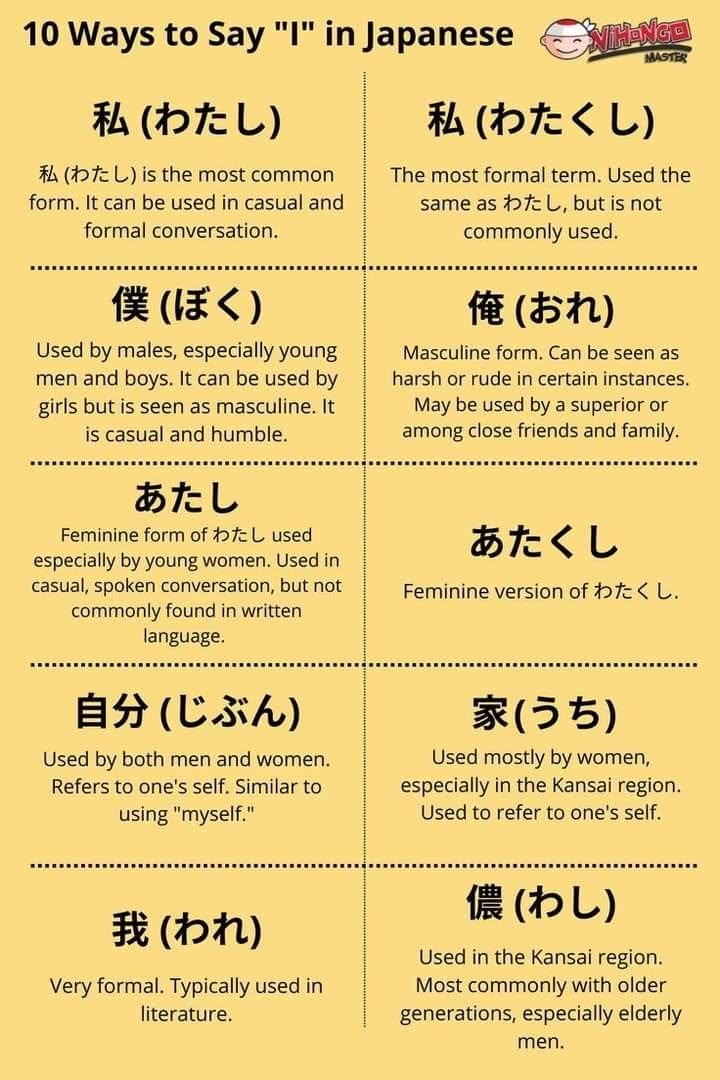
Unlike English, Japanese has many different ways to say “I.” The choice depends on the speaker’s gender, age, personality, relationship with the listener, and the level of formality. Here are ten common first-person pronouns and how they are used.
1. 私 (わたし, watashi)
The most common way to say “I.” It is suitable for both men and women and can be used in both casual and formal situations. This is the safest choice for Japanese learners.
Example:
私は日本語を勉強しています。
(わたし は にほんご を べんきょう しています。)
Watashi wa Nihongo o benkyō shite imasu.
I am studying Japanese.
2. 私 (わたくし, watakushi)
A more formal version of watashi. It is often used in business meetings, speeches, ceremonies, and customer service.
Example:
私は田中と申します。
(わたくし は たなか と もうします。)
Watakushi wa Tanaka to mōshimasu.
My name is Tanaka.
3. 僕 (ぼく, boku)
A masculine pronoun mainly used by boys and young men. It sounds gentle, modest, and friendly. Although it is primarily masculine, some women also use it to express a tomboyish personality.
Example:
僕はサッカーが好きです。
(ぼく は サッカー が すき です。)
Boku wa sakkā ga suki desu.
I like soccer.
4. 俺 (おれ, ore)
A casual and masculine way to say “I.” It is commonly used among close male friends and family members. It should not be used in formal situations because it can sound rough or arrogant.
Example:
俺がやるよ。
(おれ が やる よ。)
Ore ga yaru yo.
I’ll do it.
5. あたし (atashi)
An informal, feminine version of watashi. It is commonly used by young women in everyday conversation.
Example:
あたしも行きたい。
(あたし も いきたい。)
Atashi mo ikitai.
I want to go too.
6. あたくし (atakushi)
A feminine version of watakushi. It sounds elegant, refined, and somewhat old-fashioned. It is rarely used in everyday conversation.
Example:
あたくしがお手伝いいたします。
(あたくし が おてつだい いたします。)
Atakushi ga otetsudai itashimasu.
I will assist you.
7. 自分 (じぶん, jibun)
Literally means “oneself.” It can be used as “I” in certain situations, especially in the military, sports teams, and some regional dialects.
Example:
自分はまだ新人です。
(じぶん は まだ しんじん です。)
Jibun wa mada shinjin desu.
I am still a beginner.
8. うち (uchi)
Originally means “home,” but in the Kansai region it is commonly used to mean “I” or “me.” It is mostly used by women in casual conversations.
Example:
うちは大阪出身や。
(うち は おおさか しゅっしん や。)
Uchi wa Ōsaka shusshin ya.
I’m from Osaka.
9. 我 (われ, ware)
A very formal and literary pronoun. It is mostly found in classical literature, philosophy, speeches, and historical writing.
Example:
我思う、ゆえに我あり。
(われ おもう、ゆえ に われ あり。)
Ware omou, yue ni ware ari.
I think, therefore I am.
10. 儂 (わし, washi)
A regional pronoun commonly used by older men, especially in western Japan. It is also frequently heard in anime and manga when portraying elderly male characters.
Example:
儂はもう年じゃ。
(わし は もう とし じゃ。)
Washi wa mō toshi ja.
I’m already old.
Summary
| Pronoun | Romaji | Common Users | Formality |
| 私 (わたし) | watashi | Men & Women | Casual → Formal |
| 私 (わたくし) | watakushi | Anyone | Very Formal |
| 僕 (ぼく) | boku | Boys & Young Men | Casual → Polite |
| 俺 (おれ) | ore | Men | Casual |
| あたし | atashi | Young Women | Casual |
| あたくし | atakushi | Women | Very Formal |
| 自分 (じぶん) | jibun | Men & Women (specific contexts) | Neutral |
| うち | uchi | Mostly Women (Kansai) | Casual |
| 我 (われ) | ware | Literary | Very Formal |
| 儂 (わし) | washi | Elderly Men (mainly western Japan) | Casual (regional) |
Tip for beginners: If you’re unsure which pronoun to use, 私 (わたし / watashi) is the safest and most natural choice for most situations. 僕 (ぼく / boku) is common among young men, 俺 (おれ / ore) is only appropriate in casual settings, and 私 (わたくし / watakushi) is reserved for very formal occasions.
Related Post:
How to Say “Go,” “Come,” and “Return” in Japanese
100 Common Japanese Phrases for Daily Communication