Home / JLPT N4 Grammar

JLPT N4 Grammar

[PDF] JLPT N4 All Grammar

[PDF] JLPT N4 All Grammar JLPT N4 Grammar Points Learning Japanese grammar at the N5 level is important and will help you pass the JLPT N4 exam.  Download: The Here Related Post: Structure of purpose Grammar N4 JLPT N4 Grammar List

Read More »

JLPT N4 Grammar Easy Explanation

JLPT N4 Grammar Easy Explanation Let’s study Japanese N4 grammar patterns that are often found in the JLPT N4 test. Related Post: JLPT N4 Grammar Practice with Answer Other ways to say はい “hai” in Japanese

Read More »

JLPT N4 Grammar: ようだ (you da)

ようだ (you da) Meaning: it seems that; it appears that; it looks like; seems; looks as if~ How to use the: Verb-casual + ようだ いadj + ようだ なadj + なようだ Noun + のようだ Example sentences: 1, 雨のようだ。 ame no you da. It looks like rain.. 2, 彼は何かを推し測っているようだった。 kare wa nanika …

Read More »

JLPT N4 Grammar: し (shi)

し (shi) Meaning: and; and what’s more; emphasis~ How to use the: Verb-casual + し いadj + し なadj + だし Noun + だし Example sentences: 1, 彼女は疲れている。頭痛がするし、背中も痛い。 kanojo wa tsukarete iru. zutsuu ga suru shi, senaka mo itai. She’s tired. She has a headache. She has a backache. 2, …

Read More »

JLPT N4 Grammar: など (nado)

など (nado) Meaning: such as, things like, the likes of How to use the: Noun + など Example sentences: 1, 彼を愛する気持ちなど、わたしにはさらさらなかった。 kare o ai suru kimochi nado, watashi ni wa sarasara nakatta. I had not intended to love him. 2, 私はノート、ペンなどが必要だ。 watashi wa nooto, pen nado ga hitsuyou da. I …

Read More »

JLPT N4 Grammar: ことがある (koto ga aru)

ことがある (koto ga aru) Meaning: there are times when; (something) happens on occasions; sometimes How to use the: Verb-casual, non-past + ことがある Example sentences: 1, ほとんどの人は、経済的な不安に直面することがあるだろう。 hotondo no hito wa, keizaiteki na fuan ni chokumen suru koto ga aru darou. Most of us face economic worries. 2, たまに自転車で通勤することがある。 tamani jitensha …

Read More »

JLPT N4 Grammar: あまり~ない (amari~nai)

あまり~ない (amari~nai) Meaning: not very, not much~ How to use the: あまり + Verb-ないform あまり + Noun + じゃない/ではない あまり + いadj (-い) + くない あまり + なadj + じゃない/ではない Explain: 「あまり」 is an adverb that indicates the degree. When function as modifiers for adjectives, they are placed before the …

Read More »

JLPT N4 Grammar: 全然~ない (zenzen~nai)

全然~ない (zenzen~nai) Meaning: (not) at all How to use the: 全然 + Verb-ないform Explain: Adverbs denote the degree, and when they function as a modifier, they are preceded by the verb. Meaning completely … no, always go with the negative sentence. Example sentences: 1, お金が全然ありません。 Okane ga zenzen arimasen. I …

Read More »

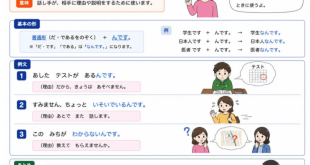
JLPT N4 Grammar: んです (ndesu)

んです (ndesu) Meaning: to explain something; show emphasis How to use the: Verb (casual) + んです Explain: Used to explain a fact or give a reason Example sentences: A – どうしたんですか?元気がありませんね Dō shita ndesu ka? Genki ga arimasen ne What is the matter with you? Seems not good B – …

Read More »