How to use こ, そ, あ, and ど in Japanese こ、そ、あ、ど hope this will help you to understand their uses in Japanese. これ kore = this (one) それ sore = that (one) “close to the listener” あれ are = that (one) “far from both of us” どれ dore = which (one) この kono + [noun] = this [noun] …
Read More »Learn Japanese
How to Make Japanese Verbs て-form (te-form)?
How to Make Japanese Verbs て-form (te-form)? How to make te-form from Masu form in Japanese Language… Related Post: Personal Pronouns in Japanese THE 3 JAPANESE VERB GROUPS
Read More »Let’s learn some words with “Every” in Japanese
Let’s learn some words with “Every” in Japanese Related Post: Expressing frequency in Japanese Common Japanese verbs – Part 1
Read More »Expressing frequency in Japanese
Expressing frequency in Japanese Expressing frequency to help take your Japanese to the next level Frequency Verbs in Japanese 1. たいてい (Taitei) – Usually 夜はたいていボウリングに行きます。 yoru wa taietei bouringu ni ikimasu At night, we usually go bowling. 2. ときどき (tokidoki) – sometimes 葉がときどき落ちてきた。 Hapa ga tokidoki ochitekita. Leaves fall down …
Read More »THE 3 JAPANESE VERB GROUPS
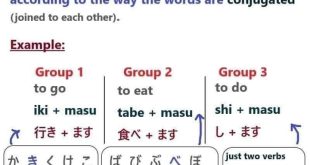
THE 3 JAPANESE VERB GROUPS Verbs Group in Japanese Japanese verbs are classified into three groups: Group 1 (-いる and – えるverbs), Group 2 (-る verbs) and lastly Group 3 (irregular verbs. All these three groups are differentiated by the ending of the verb. Group 1: ~ U Ending Verbs …
Read More »How to use the verb あげます / くれます / もらいます
How to use the verb あげます / くれます / もらいます How to use verbs in Japanese Related Post: Japanese Verbs with the particle に Most Useful Japanese Verbs
Read More »What is difference between あります and います
What is difference between あります and います あります – inanimate things います – animate things 1️. あります (arimasu) is used when what is present does not move by itself, like thing or plant. Noun が あります Noun ga arimasu Meaning: There is a Noun. (for inanimate thing including plant) Eg: …
Read More »Meaning of your birthday in Japanese
Meaning of your birthday in Japanese Days: 1日 : 欠片(かけら) : Fragment 2日 : 天使 (てんし) : Angel 3日 : 涙(なみだ) : Tears 4日 : 証(あかし) : Evidence 5日 : 夢(ゆめ) : Dream 6日 : 心 (こころ) : Heart 7日 : しずく : Drops 8日 : ようせい: Fairy 9日 : …
Read More »Being late in Japanese
Being late in Japanese Learn some Japanese adjectives by saying go late in Japanese. Related Post: Common Japanese Homophones Some ways to say “Thank you” in Japanese
Read More »Some ways to say “Thank you” in Japanese
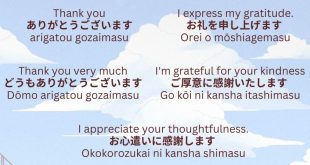
Some ways to say “Thank you” in Japanese In Japan, expressing gratitude plays a vital role in social interactions. Formal: ありがとうございます (Arigatou gozaimasu): This is the most common and versatile way to politely say “thank you” in Japanese. It can be used in various situations, such as receiving a gift, …
Read More »
Learn Japanese Free Learn Japanese Free