Learn Japanese Free Learn Japanese Free
65 Essential Japanese Grammar Points for JLPT N4
| No. | Grammar | Form | Meaning | Example |
| 1 | 〜あいだに | Vる / Vている / Vない / Nの | while, during | 寝ているあいだに地震があった . An earthquake hit while I was asleep |
| 2 | 〜たところ | Vた | have just done | 今、家に帰ったところだ . I’ve just got home |
| 3 | 〜たばかり | Vた | just did (feels very recent) | さっき起きたばかりです . I just woke up a moment ago |
| 4 | 〜ているところ | Vている | be in the middle of 〜ing | 今、使っているところだ . I’m using it right now |
| 5 | 〜はじめる | V-masu stem | start to 〜 | 学校に通いはじめる . start attending school |
| 6 | 〜だす | V-masu stem | suddenly start to 〜 | 赤ちゃんが泣きだした . The baby burst into tears |
| 7 | 〜つづける | V-masu stem | keep on 〜ing | 3時間も話しつづけた . talked for 3 hours straight |
| 8 | 〜まで | N / Vる | until 〜 (continuously) | 来月まで薬を飲む . take medicine until next month |
| 9 | 〜までに | N / Vる | by 〜 (deadline) | 9時までに来てください . Please come by 9 o’clock |
| 10 | 〜で (time) | N | in, within (time) | 料理は5分でできる . The dish is ready in 5 minutes |
| 11 | 〜たまま | Vた / Vない / Nの | leaving 〜 as it is | テレビをつけたまま寝た . fell asleep with the TV on |
| 12 | 〜ずに | V-nai stem | without 〜ing | 何も食べずに働いた . worked without eating anything |
| 13 | 〜ておく | Vて | do 〜 in advance | メモを書いておく . write a note beforehand |
| 14 | 〜かもしれない | Plain form (V/A/Na/N) | might, may | 雨が降るかもしれない . It might rain |
| 15 | 〜はずだ | V / A / Naな / Nの | should, be expected to | 薬を飲めば、治るはずだ . It should get better with medicine |
| 16 | 〜はずがない | V / A / Naな / Nの | can’t possibly | 彼がうそをつくはずがない . He can’t possibly lie |
| 17 | 〜そうだ (looks like) | V-masu stem / A-stem / Na | looks 〜, seems 〜 | 難しそうな本 . a difficult-looking book |
| 18 | 〜そうだ (hearsay) | Plain form (V/A/Na/N) | I hear that 〜 | 父は元気だそうだ . I hear my father is well |
| 19 | 〜ようだ | V / A / Naな / Nの | it seems that 〜 | 彼は昨日来なかったようだ . It seems he didn’t come yesterday |
| 20 | 〜らしい (conjecture) | Plain form (V/A/Na/N) | apparently 〜 | 二人は結婚するらしい. Apparently they’re getting married |
| 21 | 〜らしい (typical) | N | typical of, like a true 〜 | 学生らしい服 . clothes befitting a student |
| 22 | 〜といい | Vる / Vない / A / Na / N | I hope 〜 | 病気が早く治るといい . I hope you get well soon |
| 23 | 〜てもいい | Vて / Aくて / Naで / Nで | may, it’s OK to 〜 | 窓を開けてもいいですか . May I open the window? |
| 24 | 〜てもかまわない | Vて / Aくて / Naで / Nで | don’t mind if 〜 | この服は汚れてもかまわない . It’s fine if these clothes get dirty |
| 25 | 〜てはいけない | Vて | must not 〜 | ここでたばこを吸ってはいけない . You must not smoke here |
| 26 | 〜な (prohibition) | Vる | Don’t 〜! (strong) | ごみを捨てるな . Don’t litter! |
| 27 | 〜ないでください | Vない | please don’t 〜 | タバコを吸わないでください . Please don’t smoke |
| 28 | 〜なさい | V-masu stem | do 〜 (command) | 早く寝なさい . Go to bed now! |
| 29 | 〜ほうがいい | Vた / Vない | had better 〜 | 外に出ないほうがいい . You’d better not go out |
| 30 | 〜つもり | Vる / Vない | intend to 〜 | これからどうするつもりですか . What do you plan to do now? |
| 31 | 〜ことにする | Vる / Vない | decide to 〜 | 一緒に行くことにする . decide to go together |
| 32 | 〜にする | N | decide on 〜, choose 〜 | プレゼントはセーターにした . I chose a sweater as the gift |
| 33 | 〜ようにする | Vる / Vない | try to 〜, make a point of 〜 | 遅刻しないようにする . try not to be late |
| 34 | 〜ようになる | Potential V / Vない | come to (be able to) 〜 | 英語が話せるようになった . I’ve become able to speak English |
| 35 | 〜になる | N, Na + に / A-く | become 〜 | 元気になる — get well |
| 36 | 〜たがる | V-masu stem + たがる | (someone else) wants to 〜 | 子どもは野菜を食べたがらない . Kids don’t want to eat vegetables |
| 37 | 〜ために (purpose) | Vる / Nの | in order to 〜 | 日本で働くために勉強する . study in order to work in Japan |
| 38 | 〜ことができる | Vる | can, be able to 〜 | 漢字を書くことができる . can write kanji |
| 39 | 〜ことがある | Vる / Vない | sometimes 〜 | 日本の歌を歌うことがある . I sometimes sing Japanese songs |
| 40 | 〜たら | Vた / Aかった / Naだった / Nだった | if 〜, when 〜 | 近所の人に会ったら挨拶する . If I meet a neighbor, I say hello |
| 41 | 〜なら (topic) | N | if it’s 〜 | これなら買います . If it’s this one, I’ll buy it |
| 42 | 〜なら (assumption) | Plain form (V/A/Na/N) | if 〜 (assuming) | あなたが行くなら、私も行く . If you go, I’ll go too |
| 43 | 〜ために (cause) | Plain form (Naな / Nの) | because of 〜 | 携帯を忘れたために遅れた . I was late because I forgot my phone |
| 44 | 〜で (cause) | N | because of 〜 (cause) | 地震でビルが倒れた . The building collapsed in the earthquake |
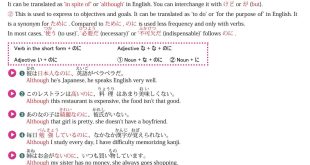
| 45 | 〜のに | Plain form (Naな / Nな) | even though 〜 | 何回も電話したのに出ない . I called many times, but no answer |
| 46 | 〜か | Plain form (V/A/Na/N) | whether 〜 (embedded question) | どこで買ったか覚えている? . Do you remember where you bought it? |
| 47 | 〜か〜ないか | Vる / Vない | whether or not 〜 | 行くか行かないか決める . decide whether to go or not |
| 48 | 〜から (material) | N | made from 〜 | チーズは牛乳から作られる . Cheese is made from milk |
| 49 | 〜しか〜ない | N | only 〜 (+ negative) | チケットがある人しか入れない . Only ticket holders can enter |
| 50 | 〜だけ | N / plain V | only, just | これだけ食べます . I’ll eat just this |
| 51 | 〜で (quantity) | N | for 〜 (in total) | 5つで3千円です . 3,000 yen for five |
| 52 | 〜でも | N | 〜 or something | コーヒーでも飲もう . Let’s have coffee or something |
| 53 | 〜とか〜とか | N / V | things like 〜 and 〜 | スプーンとかナイフとか . things like spoons and knives |
| 54 | 〜ほど〜ない | N | not as 〜 as | 今日は昨日ほど暑くない . Today isn’t as hot as yesterday |
| 55 | 〜より | N | than 〜 | AはBより高い . A is more expensive than B |
| 56 | 〜も (quantity) | N (amount) | as many as 〜 | 5回も読んだ . read it as many as 5 times |
| 57 | 〜に (passive) | N | by 〜 (passive agent) | 外国人に道を聞かれた . I was asked the way by a foreigner |
| 58 | 〜の | N | 〜’s (one) | どれがあなたのですか . Which one is yours? |
| 59 | 〜という | N | called 〜, named 〜 | 田中という人 . a person called Tanaka |
| 60 | 〜によると | N | according to 〜 | 天気予報によると雨だ . According to the forecast, it’ll rain |
| 61 | どんな〜 | どんな + N | what kind of 〜 | どんな本が好きですか . What kind of books do you like? |
| 62 | 〜やすい | V-masu stem | easy to 〜, prone to 〜 | 病気になりやすい . prone to getting sick |
| 63 | 〜にくい | V-masu stem | hard to 〜 | 暗くて見えにくい . It’s dark and hard to see |
| 64 | 〜すぎる | V-masu stem / A-stem / Na | too 〜, too much | 食べすぎる . eat too much |
| 65 | 〜かた | V-masu stem | way of 〜ing, how to 〜 | 漢字の読み方 . how to read kanji |
Related Post:
Japanese Grammar for JLPT N4 PDF
JLPT N4 Useful Grammar Patterns