Learn Japanese Free Learn Japanese Free
JLPT N5 Grammar Study Guide
JLPT N5 Grammar Preparation
| No. | 日本語 | English | 例文 | Example sentence |
| 1 | は | am, is, was and were | これはしゅくだいです。 | This is (your) homework. |
| 2 | も | also, too | わたしはねこがすきです。いぬもすきです。 | I like cats, I also like dogs. |
| 3 | の | of, ‘s (Possessive Marker or connecting nouns) | 日本の神奈川出身です。 | I’m from Kanagawa, Japan. |
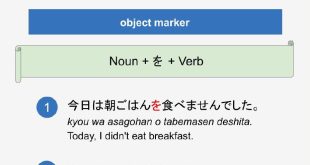
| 4 | Object を | direct object particle | お寿司を食べます。 | I eat sushi. |
| 5 | が | Topic marker (emphasis on the topic) | 問題の5ばんがわかりません。 | I don’t understand question 5. |
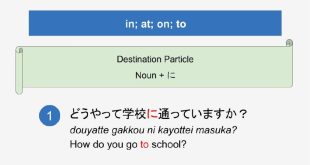
| 6 | に | at, to (Indicate time, destination, action towards to someone) | 7じはんにおきます。 | I get up at seven thirty. |
| 7 | へ | to (focus is the direction.) | 海へ行きます。 | I will go to the beach (sea). |
| 8 | で | in (an action happens) by (method of action, such as transportation or tool usages) | 電車でしごとに行きます。 | I go to work by train. |
| 9 | です | to form polite statements | 田中さんは日本人です。 | Mr. or Mrs. Tanaka is Japanese. |
| 10 | だ | to form statements | 田中さんは日本人だ。 | Mr. or Mrs. Tanaka is Japanese. |
| 11 | ですか | forming questions with nouns or adjectives | りゅうがくせいですか。 | Are you an International student? |
| 12 | ますか | forming questions with verbs | 一回、のりかえますか。 | Are we going to change train once? |
| 13 | と | A and B / together with | 日本語と英語を話します。 | I speak Japanese and English. |
| 14 | や | A and B, for example | 東京や大阪に行きました。 | I went to Tokyo and Osaka. (may have visited other places as well). |
| 15 | ~ね | right? / isn’t it? | これは日本茶ですね? | This is Japanese tea, isn’t it? |
| 16 | だな | right? / isn’t it? (commonly used among men) | あれは社長の車だな。 | That is CEO’s car, right? (Is that the CEO’s car, right?) |
| 17 | ~よ | used for confirmation or emphasis | 月曜日、私はハイキングに行きませんよ。 | I will not go hiking on Monday. |
| 18 | この・その・あの + Noun | This, it / the, that | この本は田中さんのです。 | This book belongs to Mr. or Mrs. Tanaka. |
| 19 | これ、それ、あれ | This, it / the, that | これはタイ旅行の写真です。 | This is a travel photo from Thailand. |
<ます form> Take off ます and add the following grammar points
| No. | 日本語 | English | 例文 | Example sentence |
| 20 | ~ませんか | Would you like to do…? | 月曜日の7時に会いませんか。 | Would you like to catch up on Monday at 7? |
| 21 | ~ましょう | Let’s (polite invitation) | あのベンチにすわりましょう。 | Let’s sit down on the bench! |
| 22 | ~ましょうか | Shall I do something (for you)? / Shall we… | 会話の練習をしましょうか。 | Shall we practice having a conversation? |
| 23 | ~たいです | want to do something | 日本語をもっと話したいです。 | I want to speak more Japanese. |
| 24 | ~たくないです | don’t want to do something | すみません、お酒は飲みたくないです。 | Sorry, but I don’t want to drink alcohol. |
| 25 | ~にいく | the purpose of going | わたしたちは日本に桜をみにいきました。 | We went to Japan to see cherry blossoms. |
| 26 | ~にかえる | the purpose of returning or going home | 中国に家族に会いに帰る。 | I go back to China to visit my family there. |
| 27 | ~な | Do it (informal) | もう11時だよ、寝な。 | It’s already 11; go to bed. |
<て-form> use て-form verbs with the following grammar points
| No. | 日本語 | English | 例文 | Example sentence |
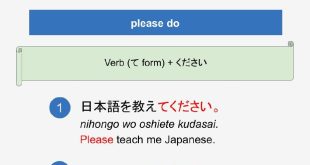
| 28 | ~てください | Please do … for me. (making a polite request) | テキストの14ページを読んでください。 | Please read the textbook on page 14. |
| 29 | ~て | Please do … for me. (making a casual request.) | あそこでくつをぬいで。 | Take off your shoes over there. |
| 30 | ~てもいいです | You may do / You can do | 自転車をここに置いてもいいです。 | You may (can) put your bicycle here. |
| 31 | ~てもいいですか | May I do… / Can I do…? | 教科書を見てもいいですか。 | May I see the textbook? / Can I see the textbook? |
| 32 | ~て | combine two or more verbs. Verb 1 and then Verb 2 | 窓をあけて、へやの掃除をする。 | I will open the window and then clean the room. |
| 33 | Verb 1 てから Verb 2 | combine two or more verbs. Verb 1 and then Verb 2 | 電話で予約してから、美容院に行く。 | I will make an appointment on the phone, then I will go to the beauty salon. |
| 34 | ~てはいけません | You must not to do… | ここで写真を撮ってはいけません。 | You are not allow to take pictures here. |
| 35 | ~ている | Verb -ing (motion is in progress) | 今、何している?宿題? | What are you doing now? Homework? |
| 36 | ~ている | have been -ing | 英語をどのくらい勉強していますか。 | How long have you been studying (learning) English? |
| 37 | Noun が~ている | Noun is …(current state) | 道が混んでいます。じゅうたいです。 | The street is crowded. There is a traffic jam. |
| 38 | まだ~ていません | have not … yet. | まだ晴れていません。 | It is still not sunny. / It not clear yet. |
| 39 | まだ~ています | still doing | まだ運動しています。あと15分待ってください。 | I am still exercising, please wait 15 minutes. |
<ない-form> use ない-form verbs with the following grammar points
| No. | 日本語 | English | 例文 | Example sentence |
| 40 | ~ない | don’t or doesn’t (verb present negative: short form) | このようふくはにあわない。 | These clothes do not suit (me or you). |
| 41 | ~ないでください | Please don’t … | ここで写真をとらないでください。 | Please do not take pictures here. |
| 42 | ~なければいけません | have to (formal) | 午前九時に学校に行かなければいけません。 | (I or You) have to go to the classroom at 9:00am. |
| 43 | ~なきゃ | have to (casual) | 初級の漢字をおぼえなきゃ。 | I have to memorise beginner kanji. |
| 44 | ~ないと…… | have to (casual) | もう帰らないと……。 | I have to go home now. |
| 45 | ~なくてもいいです | don’t have to / don’t need to do something | くつをぬがなくてもいいです | You don’t need to take off your shoes. |
| 46 | ~ないほうがいい | It is better (for you) to not do something… | しんぱいしないほうがいいよ。 | Better not worry. / It’s better if you don’t worry. |
<Dictionary-form> use dictionary form/short verbs with the following grammar points
| No. | 日本語 | English | 例文 | Example sentence |
| 47 | ことができる | be able to (describe ability or possibility) | ひらがなをよむことができる。 | I can read Hiragana. |
| 48 | ことができない | unable to | むずかしい漢字を読むことができない。 | I cannot read difficult kanji. |
| 49 | しゅみは~ことです | My hobby is … | 私のしゅみは映画やアニメをみることです。 | My hobby is watching anime or movies. |
| 50 | ~のが好きです | like doing | 日本語を勉強するのがすきです。 | I like studying Japanese. |
| 51 | ~のが上手です | good at something | お姉さんは料理するのが上手です。 | My older sister is good at cooking. |
| 52 | ~のが下手です | bad at something | 私はギターをひくのが下手です。 | I am bad at playing the guitar. |
| 53 | Aまえに、B | B before A | 寝る前に本を読む。 | I read a book before going to bed. |
| 54 | Dictionary form verb + な | Don’t do something. (end of sentence) | 走るな!あぶない。 | Don’t run; it is dangerous. |
<た-form> use た-form with the following grammar points
| No. | 日本語 | English | 例文 | Example sentence |
| 55 | ~た | did (verb past: short form) | 本屋で本を買った。 | I bought a book at the book store. |
| 56 | ~たことがある | Have the experience of / have done before | なら公園に行ったことがありますか。 | Have you been to Nara Park? |
| 57 | ~たことがない | don’t have the experience of | ハワイに行ったことがない。 | I’ve never been to Hawaii. |
| 58 | ~たり~たり | referring to multiple actions | 日曜日、映画を見たり、買い物したりしました。 | I watched a movie, shopped, etc., on Sunday. |
| 59 | ~たほうがいい | It is better (for you) to do something… | もっとやさいを食べたほうがいいです。 | It is better for you to eat more vegetables. |
Other (Conjugation could be various such as nouns, different type of verb tense.)
| No. | 日本語 | English | 例文 | Example sentence |
| 60 | ~があります / ある | there is/are X (nonliving things). To have (plans or items) | 青いスーツケースがあります。 | There is a blue suitcase. / I have a blue suitcase. |
| 61 | ~がいます / いる | there is/are X (a person or some other sentient being). Have (people, pet) | 家の前に猫が一匹います。 | There is a cat in front of my house. |
| 62 | ~から | because (reason) + から | まどをしめましょう。寒いですから。 | Let’s close the window. |
| 63 | だから | because of Noun / na-adjective | 誕生日だから、仕事をやすみます。 | I will take a day off because it is my birthday today. |
| 64 | ~ので | because (formal) (reason) + ので | 頭(あたま)がいたいので、やすみます。 | I will rest because I have a headache. |
| 65 | ~なので | because of Noun / na-adjective | 年末なので飲み会があります。 | I have drinking parties because it is the end of the year. |
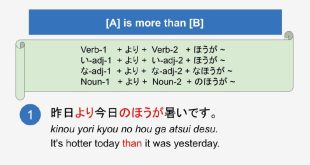
| 66 | AほうがBより | A is more something than B | 新幹線のほうが電車よりはやい。 | Shinkansen is faster than train. |
| 67 | Aのほうがいい | A is better than something else | 電車のほうがいいよ。 | A train is better. |
| 68 | ~のなかでAがいちばん | A is the most (something) | きせつのなかでいつがいちばんすきですか。 | When is your favourite season? / Which season do you like best? |
| 69 | つもりです | (I) intend to do … | 7月に試験を受けるつもりです。 | I intend to take an exam in July. |
| 70 | (i-adjective) くなる | to become | 大学の勉強が楽しくなる。 | Studying at university can be fun; it is more enjoyable. |
| 71 | (na-adjective or Noun) になる | to become | 静かになった。 | It has become quiet. |
| 72 | ~んです | used to explain cause, reasons, grounds, etc., strongly | 明日は、つまの誕生日なんです! | Tomorrow is my wife’s birthday! |
| 73 | ~んですが… | It indicates hesitation and reservation on the speaker’s side. | お湯(ゆ)が出ないんですが……。 | There’s no hot water… |
| 74 | ~すぎる | “too much,” or “to excess”. | このケーキはあますぎます。 | This cake is too sweet. |
| 75 | ~でしょう | probably | 明日は雨が降るでしょう。 | It will probably rain tomorrow. |
| 76 | ~でしょう? | right? | 明日、友達の家に電車で行くでしょう? | You’re going to a friend’s house tomorrow, aren’t you? |
| 77 | もう~ました | already did something | 大学をもう卒業したから、仕事を探します。 | I have already graduated from university, so now I will be looking for a job. |
| 78 | ~だろう | probably; right? I guess; I wonder | 外がうるさいな。何しているんだろう。 | It’s noisy outside. I am wondering what they are doing. |
| 79 | AまえにB | B before A | 試験の前に、先生にしつもんをする。 | I will ask the teacher some questions before the exam. |
| 80 | AまえでB | B in front of A | 図書館の前で友達を待つ。 | I will wait for my friend in front of the library. |
| 81 | AあとでB | B after A | 映画のあとで、おふろにはいる。 | After the movie, I will have a bath. |
| 82 | ~(だ)とおもいます | I think | いとうさんの誕生日は9月だとおもいます。 | I think Mr. or Ms. Ito’s birthday is in September. |
| 83 | ないとおもいます。 | I don’t think | いとうさんの誕生日は9月じゃないとおもいます。 | I don’t think Mr. or Ms. Ito’s birthday is in September. |
| 84 | ~といっていました | Somebody said that… / Somebody said “direct quote” | えみさんは「小さい犬を飼っている」と言っていました。 | Emi said that she has a small dog. |
| 85 | けれども / けど | however | 旅行に行きたいけれども、時間がありません。 | Although I want to go on a trip, I have no time. |
| 86 | でも、 | but (use beginning of sentences) | パン屋に行きました。でも、何も買いませんでした。 | I went to the bakery, but I did not buy anything. |
| 87 | Noun でも | Something like.. | ビールでも飲みに行きませんか。一杯だけでも。 | Shall we go for a drink beer or something? Even just one glass? |
| 88 | ごろ | around (approximate time) | 来週の土曜日の午後5時半ごろに空港にとうちゃくします。 | I will be arriving at the airport around 17:30 next Saturday. |
| 89 | ぐらい | around (length of time & approximate time) | 飛行機で10時間ぐらいかかりました。疲れました。 | It took about 10 hours. I am tired. |
| 90 | ~について | about, regarding | 両親と専攻について相談する。 | I will talk/consult with my parents regarding my major (which major to choose). |
| 91 | ~ます | will do something (verb present / future) | 明日、図書館で日本語の宿題をします。 | I’ll do my Japanese homework in the library tomorrow. |
| 92 | ~ました | did (verb past) | 昨日、一人でお弁当を作りました。 | I made a boxed lunch by myself yesterday. |
| 93 | ~ません | don’t or doesn’t (verb present negative) | タバコはすいません。 | I don’t smoke. |
| 94 | ~ませんでした | didn’t (verb negative past) | 忙しかったので、昼ごはんを食べませんでした。 | I didn’t have lunch because I was busy. |
| 95 | ~なかった | didn’t (verb negative past : short form) | コンビニで雑誌を買わなかった。 | I did not buy a magazine at the convenience store. |
| 96 | いAdjective かった | was, were | りょこうはたのしかった。 | The trip was fun. |
| 97 | いAdjective くない | is not, am not | このドラマはぜんぜんおもしろくない。 | This drama is not interesting at all. |
| 98 | いAdjective くなかった | was not | 11月はあまりさむくなかった。 | It was not that cold in November. |
| 99 | いAdjective くて | And (connecting adjectives) | 昨日は天気がよくて、あつかったです。 | The weather was nice yesterday and it was hot. |
| 100 | (Noun or な-adjectives) だった | was, were | 沖縄の海はきれいだった? | Was the sea in Okinawa beautiful? |
| 101 | (Noun or な-adjectives) じゃない | is not, am not | これは私の荷物じゃないです。 | This is not my luggage. |
| 102 | (Noun or な-adjectives) じゃなかった | was not, was not | きのうはひまじゃなかった。 | I was not free yesterday. |
| 103 | (Noun or な-adjectives)で | And (connecting adjectives) | この部屋はきれいであかるいです。 | This room is clean and bright. |
| 104 | いつ | When | にほんごのしけんはいつですか。 | When is your Japanese exam? |
| 105 | どこ / どちら | Where | しゅっしんはどこですか。 | Where are you from? |
| 106 | なぜ / どうして | Why | どうしておこっているの? | Why are you angry? |
| 107 | だれ | who | 昨日、だれとあそびましたか。 | Who did you play with yesterday? |
| 108 | だれの | Whose | あのかばんはだれのですか。 | Whose bag is that? |
| 109 | どうやって | How | とうきょうえきにどうやっていきますか。 | How do you get to Tokyo Station? |
| 110 | どう + verb | How to do something | このドアはどう開けますか。 | How do you open this door? |
| 111 | どの + Noun | which | どのりんごがいちばん安いですか。 | Which apple is the cheapest? |
| 112 | どのくらい | How long / How far (How much) | えきからホテルまであるいてどれくらいですか。 | How long is the walk from the station to the hotel? |
| 113 | どう | How | なつやすみはどうだった? | How was the summer holiday? |
| 114 | どんな + Noun | What kind of / sort of | 京都はどんな町ですか。古い歴史的な場所です | What kind of town is Kyoto? It’s an old and historic place. |
| 115 | よく、だいたい、たくさん、少し、あまり、全然 | adverbs | 日本語が少しわかります。 | I understand some Japanese. |
| 116 | Noun (time) までに + verb | Before / by (time limit) | 金曜日までにこの2冊の本をかえさなければなりません。 | I have to return these two books by Friday. |
| 117 | AからBまで | from A to B (time, distance etc) | いつも午前9時から午後5時まで働きます。 | I always work from 9 to 5. |
| 118 | なかなか | not easily, not as expected | 日本ではなかなか羊を見ることができません。 | We rarely see sheep in Japan. |
| 119 | ぜひ | hope, (I’d love to) | ひっこししました。ぜひ遊びに来てください。 | We have moved out. Please come and visit us. |
| 120 | とき | when | こどものとき、よく川で泳ぎました。 | I used to swim in a river when I was a child. |
Related Post:
N5 Grammar Flashcards: Part 1
Basic Japanese Grammar